
Paternity Lawyers Ontario:
Establishing Parentage & DNA Testing
Proving the legal bond that triggers both rights and responsibilities
Book a Paternity Strategy SessionParentage Strategy reviewed by Deepa Tailor, Senior Family Lawyer. Updated January 2026 to reflect the Children's Law Reform Act and All Families Are Equal Act.
Too Busy to Read? The 30-Second Summary:
The Document:
If you are not on the birth certificate, you may need a "Declaration of Parentage" from the court to assert your rights.
The Test:
The court can order DNA testing. Refusing a test usually results in the court assuming you are the parent.
The Result:
Establishing paternity triggers both Rights (Decision-Making/Access) and Responsibilities (Child Support). You cannot choose one without the other.
Identity & Obligation
Is he the father? Am I the father? These aren't just emotional questions—they are the foundation of every legal right regarding a child.
Whether you are a mother seeking support, or a father seeking access, the first step is proving the legal bond exists. Without that proof, the system won't recognize your claim—and the other party can deny everything.
For Fathers: Seeking Access
Source: Children's Law Reform Act
The Barrier:
If you weren't married and aren't on the birth certificate, the school and doctors may not talk to you. The mother can block your access to medical records, report cards, and even prevent you from picking up your child.
Our Strategy:
We file the Application for a Declaration of Parentage to force the system to recognize you. Once the court declares you the legal parent, you have standing to seek a parenting order.
For Mothers: Seeking Support
The Strategy:
If the biological father denies paternity to avoid paying child support, we file a motion for DNA testing. The court will order him to submit to testing at an accredited lab.
The Result:
Once the test comes back positive, support is retroactive. He doesn't just start paying from the court date—he owes support from the child's birth (or from when you first asked for it).
Important Note:
If he refuses the test, the judge will draw an "adverse inference" and declare him the father anyway—without needing DNA proof.
The DNA Process: Legal vs. DIY
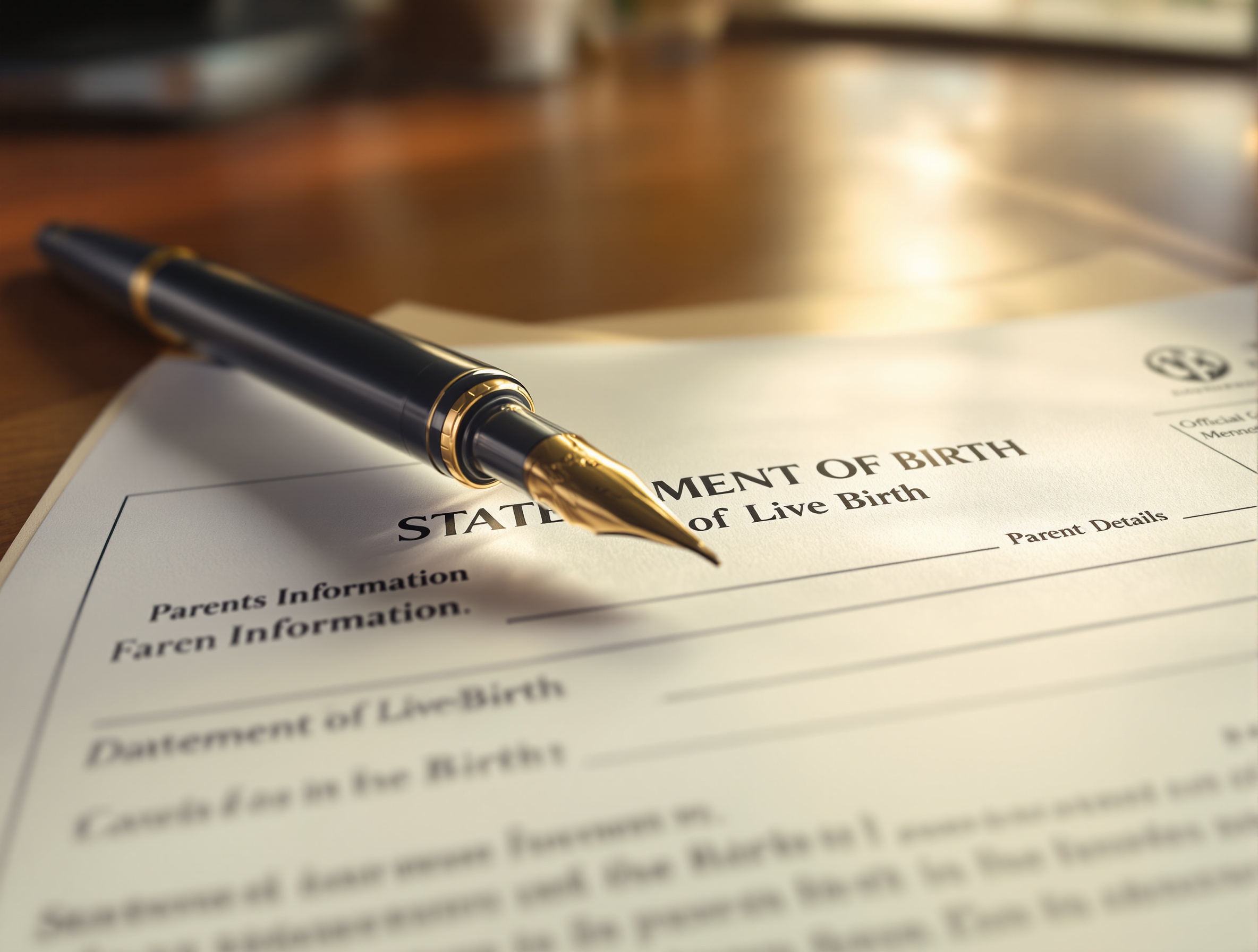
The Warning:
Do not use a pharmacy DNA kit. The court will reject it because there is no "Chain of Custody"—no proof of who actually gave the sample.
Anyone could have submitted the DNA. The mother could claim you swapped samples. The judge won't accept it.
Court-Approved DNA Testing Process:
Accredited Laboratory
We arrange testing through an accredited lab (such as Viaguard or LifeLabs) where identities are verified with government-issued ID.
Chain of Custody
The lab documents who provided each sample, when it was collected, and how it was stored. This creates an unbroken chain of evidence.
Court-Admissible Report
The lab issues a report that meets legal standards. The judge can rely on it without requiring the lab technician to testify.
Results Timeline
Results typically take 5-10 business days. Accuracy is 99.9%+ for inclusion (positive match) or 100% for exclusion (not the father).
Disputing Parentage: "I Signed, But Now I'm Not Sure"
The Scenario:
You signed the birth certificate when the child was born. You believed you were the father. But now, months or years later, you have doubts.
Maybe the relationship ended badly. Maybe someone told you the timeline doesn't add up. Maybe the child doesn't look like you.
Can You Challenge It?
Yes, but you must act fast. The law allows you to apply to set aside a Declaration of Parentage or challenge your status on the birth certificate.
However, the longer you wait, the harder it becomes. If you've been acting as the child's parent for years, paying support, spending time together, making decisions, the court may rule that you are the "psychological parent" even if biology says otherwise.
Legal Reality:
Courts prioritize the best interests of the child. If the child has bonded with you and sees you as their parent, the judge may refuse to terminate your obligations, even if DNA proves you're not the biological father.
This is especially true if:
- The child is older (typically over 2-3 years)
- You've been paying child support consistently
- You've exercised parenting time regularly
- The biological father is unknown or uninvolved
Our Approach:
We assess your situation honestly. If you have a strong case (recent discovery, minimal bonding, biological father available), we'll fight to remove your obligations.
If the court is likely to maintain your status as psychological parent, we'll help you understand your options and negotiate the best possible outcome.
Frequently Asked Questions
Common questions about establishing paternity in Ontario
Get the Truth. Secure Your Rights.
Whether you're seeking to establish parentage or challenge it, we provide clear strategy and proven results.